
CIO Corner: Claude’s New Models Mean the End of BI as We Know It
Nasuni’s Dalan Winbush shows how Claude’s interactive artifacts are collapsing the distance between data and decision — and what it means for BI teams.
June 16, 2026 | Dalan Winbush
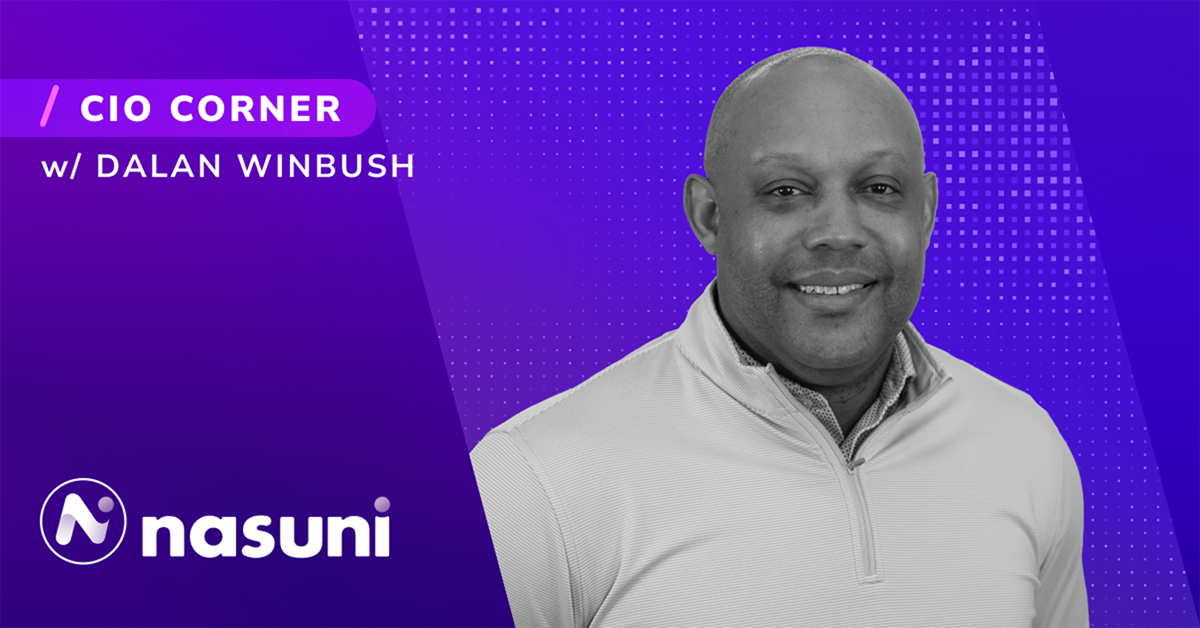
My wife thinks I’m having an affair. She overheard me on the phone with another woman and asked who I was talking to. Except that the other woman isn’t a woman at all. It’s Claude’s voice capability, which I use to capture thoughts and riff on ideas. But perhaps she’s right to be suspicious, because Claude and I have been spending a lot more time together lately.
Opus 4.6 hit the market early in February. Next came Sonnet 4.6, which delivers the same coding quality as Opus 4.5 — at a fifth of the cost. Then Opus 4.7 in April, and Opus 4.8 in May. It manages complex, long-running tasks more reliably than its predecessors, verifies its own outputs, and can work with less supervision on advanced engineering and agentic workflows.
We are now running on a three-week cycle of AI innovation. That’s the new pace of this market. And what I’ve seen in the past three weeks has changed how I think about an entire enterprise function: business intelligence.
Crossing the line from analysis to insight
For 20 years, BI tools like Tableau, Looker, and Power BI have been helping us visualize data. We connect them to our business data, and they create dashboards and reports that answer the question: what’s happening in the business?
But there was a line they never crossed. The line between analysis and insight. A whole different question: what should we do about it?
The job of answering that second question fell to people. You handed the numbers to your FP&A or BA team and asked them to prep you for the board meeting. Identify the signals. Flag the risks. Highlight the opportunities. You gave a human the task. And then you waited a week for the deck.
That line has now been crossed. The interactive artifacts that Claude’s new models can generate bring you the same level of insight in seconds. I know because I built a tool that does it.
A week’s BI work in ninety minutes
I connected a Jira MCP server to Claude and asked it to build me an interactive dashboard across four of my team’s spaces: automation, data, InfoSec, and IT service desk. I went back and forth with Claude, iterating and tailoring. All in, it took me an hour and a half to prep it with data and instructions. It took ten minutes. Then the dashboard was ready.
The output includes real-time capacity analysis, demand forecasting, backlog status, case priorities, and risks for every team. Additional tabs let me review live tickets by function and see throughput, backlog health, and red flag metrics at a glance. At the top is an executive summary panel that surfaces the most urgent insights. It said that AI-related requests to my team are accelerating. That we’re keeping up for now but won’t if the current trend continues. It even told me that one of our desktop support engineers is a significant dependency risk because he closes most of the tickets!
That’s your ‘so what?’. Next comes the action.
Decision Velocity as Competitive Advantage
Our most recent ELT meeting was about pipeline coverage going into Q2. We’d noticed that conversion rates were increasing. Our new SDR initiatives were working. So, we gave Claude those numbers and the activities driving them, along with our Annual Operating Plan, objectives, and headcount. We asked, simply: how do we hit our Q2 goal?
Six months ago, that question would have taken three days to answer. The reply arrived 15 minutes later. A roadmap for sustaining pipeline health, with target conversion rates by industry and recommended actions by role. And we acted on it the same day.
That velocity just became your differentiator. Organizations that move from data to decision sooner can pivot faster. They can respond to disruption more decisively. Those are the companies who will lead their categories.
Decide between elimination and elevation
The core function of your BI engineer – building dashboards that surface data – can now be done in a ninety-minute conversation by someone with no technical skill or analytics training. That’s not a distant threat. It’s already happened. But it is also an opportunity.
If I were a mid-career business analyst today, I would take the executive insights and recommended actions from my dashboard, build a narrative around them, and present it to the ELT. I’d be the person who extracted intelligence from data, and I’d look like a superstar.
But superstars don’t ignite themselves. The responsibility for making that happen sits with the CIO, the CHRO, and the COO. Get these tools into your BI teams’ hands. Train them in new ways of working. Empower them to play and fail. Keep your BI teams relevant, and you keep your business relevant. The difference between role elimination and role elevation gets decided by what you do next.
CIO Corner is the executive lens on what’s next in IT, delivered by Nasuni CIO, Dalan Winbush. With a firsthand perspective from the frontlines of IT leadership, Dalan unpacks what it really takes to modernize infrastructure, harness AI, and lead through complexity. This series tackles the hard questions CIOs face today, such as scalability, resilience, velocity, and value. It’s a candid look at how cloud and AI are reshaping enterprise IT — from someone who’s doing it, not just talking about it.
Related resources
May 27, 2026 | Ryan Miller
Tech Distilled: What F1 Racing Taught Me About AI Data Curation
Nasuni’s Ryan Miller shares the unlikely – and powerful – intersection between Formula 1 racing and AI data curation.
Read more
April 30, 2026 | Dalan Winbush
CIO Corner: Six Mistakes Enterprises are Making with Agentic AI
Nasuni’s Dalan Winbush shares six critical mistakes companies are making with agentic AI and outlines what CIOs must change to realize value from workflow…
Read more
April 29, 2026 | Sam King
Once in a Decade, Three Times in Ten Years: Isn’t It Time to Ask a Different Question?
Hardware price spikes and supply chain shocks are becoming the new normal. Nasuni’s CEO Sam King discusses how software-defined, cloud-native architecture…
Read more